


Custom Bolt
JM Hardware is a custom bolt manufacturer with 18 years experiences, our bolts are used by a broad range of industries requiring assemblies and fastening applications. These threaded fasteners can connect machine parts, mount equipment, and more. As a removable fastener, they also facilitate the regular maintenance and inspections that keep equipment running longer.
JM offers both standard and custom bolts and fasteners to meet different grades and specifications. This ensures we can cover the full spectrum of our manufacturing customers' applications, including
Mining
Heavy equipment
Construction
Transportation
Automotive
Energy and alternative energy
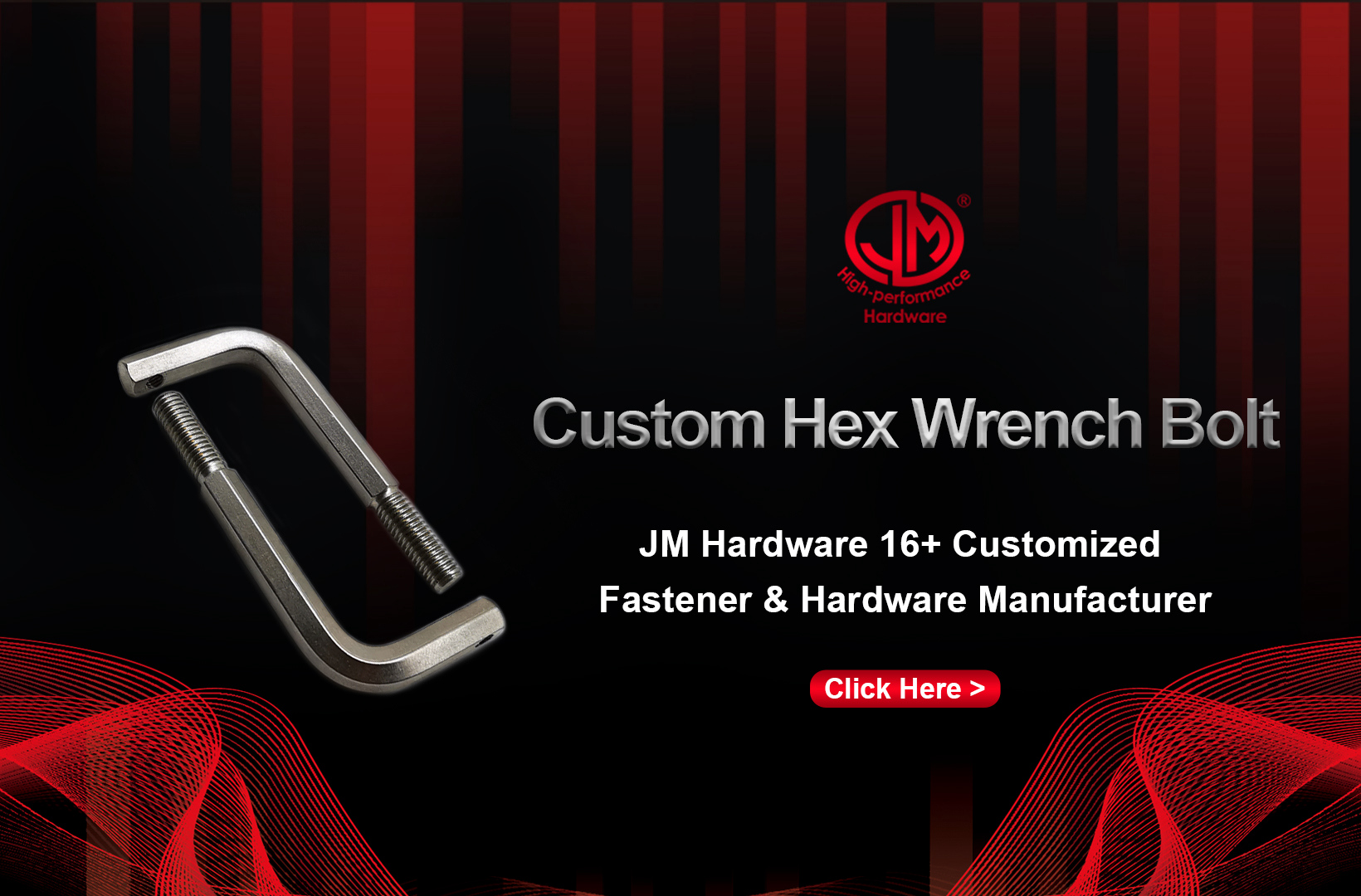

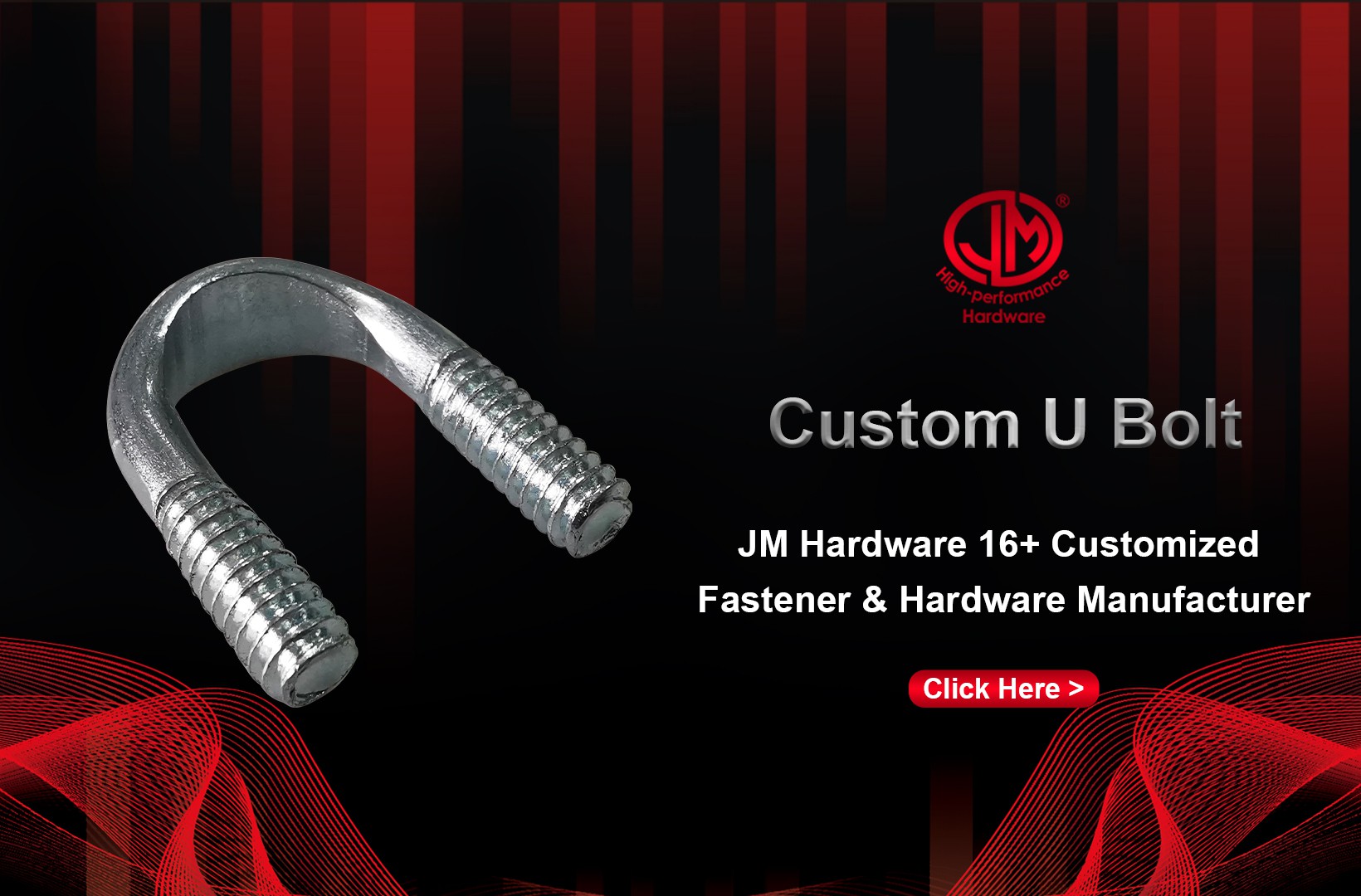
Custom Bolt Types and Structural Design Differences
Custom bolts can differ in head geometry, shank shape, thread arrangement and installation method. We manufacture made-to-order bolt configurations for projects that require dimensions or structures beyond standard fastener designs.

Custom U Bolts
U bolts have a curved body with two threaded ends. Their geometry allows them to secure components around pipes, tubes, rods or other compatible supporting structures. When specifying a custom U bolt, the inside width, inside height, rod diameter, bend radius and thread length should be considered together.

Custom T Bolts
T bolts feature a head designed to engage with a compatible slot or channel. The head width, head thickness, neck geometry and thread position affect how the bolt fits and moves within the mating component. These dimensions should be defined according to the actual assembly design.

Custom Stud Bolts
Stud bolts use a threaded rod configuration rather than a conventional bolt head. Depending on the assembly, the design may require specified thread lengths, an unthreaded middle section or different thread arrangements at each end. Accurate overall length and thread engagement are important for installation.

Custom Round Head Bolts
Round head bolts are selected when the assembly requires a rounded head profile. The head diameter, height, bearing surface and shank dimensions should be specified to match the mating parts and available installation clearance.
Other Custom Bolt Configurations
Our existing product range also includes wrench bolts, slotted round head knurled bolts, flange bolts, step bolts, double head bolts and square bolts. Each design requires different dimensional considerations. We can review drawings and product specifications to determine the appropriate manufacturing approach for the requested configuration.
Custom Bolt Materials and Surface Finish Selection
Material and coating selection should be based on mechanical requirements, operating environment, corrosion exposure and compatibility with connected components. We handle custom fasteners in different material categories and surface treatment specifications.
Material Selection Considerations
Carbon Steel
A common material category for industrial fastening applications. Grade, heat treatment requirements and environmental protection should be confirmed according to the intended load and service conditions.
Alloy Steel
Alloy steel selection depends on the required mechanical properties and applicable material specifications. The grade and any heat treatment requirements should be stated in the drawing or purchase specification.
Stainless Steel and Special Alloys
Stainless steel and selected special alloys may be considered when corrosion resistance or other environmental requirements are important. The exact grade must be matched to the operating environment and design requirements.
Surface Treatment Options
| Finish | Selection Consideration |
|---|---|
| Zinc plating | Specify coating type, appearance, applicable thickness and corrosion requirements. |
| Black oxide | Consider appearance, base material and required supplementary protection. |
| Waxing | Confirm the intended surface condition and assembly requirements. |
| PTFE-related coating | Specify the required coating system and its application conditions. |
| Magni coating | Identify the requested coating specification and applicable requirements. |
| Passivation | Confirm material compatibility and the required passivation process. |
Important specification note: A coating name alone may not define the complete surface treatment requirement. For repeat orders and project fasteners, provide the applicable coating specification, color, thickness or performance requirement where relevant. We can review the requested finish and confirm its availability and compatibility with the selected material.
Custom Bolt Manufacturing: From Drawing Review to Finished Parts
Custom bolt production begins with understanding the required geometry, material and functional specifications. We use different metalworking processes according to the part design, production requirements and material characteristics.
Drawing Review
Review geometry, material, thread specifications, tolerances and finishing requirements.
Process Selection
Determine a suitable forming or machining route according to the product structure.
Part Manufacturing
Produce the required head, shank, bends, threads and secondary features.
Inspection and Finishing
Check the agreed product requirements and arrange the specified finishing operations.
Manufacturing Processes for Different Bolt Designs
| Process | How It Works | Typical Design Considerations |
|---|---|---|
| Cold Heading | Forms metal at room temperature using dies and forming equipment. | Suitable part geometry, material formability, head shape and production volume. |
| Hot Forging | Shapes heated metal through controlled deformation. | Material characteristics, required geometry and forming conditions. |
| Machining | Removes material through operations such as turning and drilling. | Complex profiles, holes, grooves, dimensions and specified tolerances. |
| Stamping | Forms sheet metal through operations such as blanking, punching and bending. | Applicable sheet-metal components, geometry and tooling requirements. |
The appropriate process depends on the specific bolt design. Not every manufacturing method is suitable for every material or component. Our process selection is based on the drawing and production requirements.
Custom Bolt Dimensions and Quality Inspection Requirements
Dimensional consistency is essential when custom bolts must fit existing equipment or assembly structures. A complete drawing helps define the critical dimensions and inspection requirements before production.
Key Dimensions to Define in a Custom Bolt Drawing
Head diameter, height, width, shape, bearing surface and drive configuration.
Nominal diameter, overall length, unthreaded length and shoulder dimensions.
Thread diameter, pitch, thread series, tolerance class and thread length.
Bend dimensions, slots, holes, grooves, knurling and other machined details.
Inspection Considerations for Custom Fasteners
The inspection plan should reflect the drawing, material specification and intended application. Different characteristics require different inspection methods.
| Inspection Area | What to Check |
|---|---|
| Material verification | Confirm the supplied material grade and supporting material documentation. |
| Dimensional inspection | Check critical head, shank, thread and overall dimensions against the approved drawing. |
| Mechanical properties | Verify the specified mechanical requirements using the applicable testing method. |
| Surface condition | Examine the agreed finish, visible defects and relevant coating requirements. |
| Non-destructive testing | Magnetic particle inspection can be considered for suitable ferromagnetic materials when required by the order. |
For critical custom bolt orders, we recommend confirming the drawing revision, material grade, thread requirements, critical tolerances and inspection scope before production. Magnetic particle inspection is a non-destructive testing method for detecting surface and near-surface discontinuities in suitable ferromagnetic materials; it is not a universal test for every fastener material.
Custom Bolt Manufacturer – Frequently Asked Questions
These questions address common technical and purchasing considerations when sourcing custom bolts for industrial equipment, construction assemblies and repeat manufacturing projects.
1. What information should I provide when ordering custom bolts from a manufacturer?
Provide a technical drawing or sample showing the bolt geometry, overall length, diameter, head dimensions, thread specifications and critical tolerances. You should also identify the material grade, surface finish, intended application and order quantity. For non-standard U bolts, T bolts or stud bolts, clearly indicate special dimensions such as bend radius, head-slot compatibility or different thread lengths. Complete specifications help reduce misunderstandings during quotation and production.
2. How do I choose between a custom U bolt, T bolt and stud bolt for an equipment assembly?
Choose according to the connection geometry and installation method. A U bolt is suitable for wrapping around a compatible pipe, tube or supporting member. A T bolt is designed to engage with a matching slot or channel. A stud bolt is used where threaded engagement is required without a conventional bolt head. Check the mating component dimensions and available installation space before finalizing the design.
3. Which material should I specify for custom bolts used in outdoor or corrosive environments?
Material selection depends on the actual exposure conditions, required mechanical properties and expected service environment. Stainless steel may be considered for corrosion-related requirements, while suitable carbon or alloy steel with an appropriate protective finish may be considered for other applications. Salt exposure, chemicals, moisture, temperature and contact with dissimilar metals should all be evaluated. Specify the exact material grade rather than relying only on a general material name.
4. Can custom bolts be manufactured to replace discontinued or imported fasteners?
Yes, a replacement fastener can be evaluated using an original technical drawing, physical sample or sufficiently detailed dimensional documentation. The important step is to identify the dimensions, thread system, material and functional requirements that must be maintained. If the original bolt has a special head, shoulder, bend or coating, these features should also be documented. We can review the available reference information to assess the custom manufacturing requirements.
5. How should I specify thread dimensions for custom bolts used with existing nuts or threaded holes?
Specify the thread diameter, pitch, thread series, tolerance class and required thread length. You should also identify the applicable metric or inch-based thread system. For assemblies using existing nuts or tapped holes, confirm compatibility rather than relying on nominal diameter alone. Thread engagement and clearance are particularly important when a custom bolt replaces an existing component in industrial machinery.
6. Can custom bolts include drilled holes, nylon patches or other secondary features?
JM Hardware lists secondary operations including drilling holes, nylon patching, nylon pellets and passivation. The feasibility of each operation depends on the bolt structure, material and specified location. For example, a drilled hole must be defined by its diameter, position and orientation. Nylon-related features should be specified according to the required locking function and assembly conditions. These details should be included in the drawing or approved technical specification.
7. What should purchasing teams check when ordering multiple custom bolt models in one batch?
Each model should have its own clearly identified drawing revision, part number, material specification, thread details and finishing requirements. Avoid combining different bolt models under one general description. The purchase order should also define quantities by model, packaging identification and the agreed inspection requirements. Clear product identification helps reduce the risk of mixing parts during manufacturing, delivery and warehouse receiving.
8. How can I evaluate the quality of a custom bolt supplier before approving repeat orders?
Review whether the supplier can work to controlled drawing revisions, verify material documentation, inspect critical dimensions and follow the agreed surface treatment requirements. For applications requiring additional assurance, clarify whether mechanical testing or suitable non-destructive testing is needed. You should also establish how inspection records, material identification and product traceability will be handled for your order. The inspection scope should be agreed before mass production.
9. What is the difference between custom bolt machining and cold heading?
Cold heading forms metal through dies at room temperature and can be suitable for repeat production of compatible geometries. Machining removes material to create specific dimensions, holes, grooves or profiles. The choice depends on the bolt design, material, tolerance requirements, tooling considerations and production quantity. Some custom fasteners may require a combination of manufacturing and secondary operations rather than one process alone.
10. Can a custom bolt manufacturer handle both small trial orders and larger repeat production?
The feasibility depends on the part geometry, material, tooling requirements and manufacturing process. JM Hardware describes experience with both large production runs and smaller runs for selected fastener products. When discussing a new custom bolt project, we recommend reviewing the initial quantity, expected repeat demand, tooling requirements and inspection arrangements together. Production feasibility and lead time should be confirmed for the specific part rather than assumed to be identical across all bolt types.
Explore Related Fastener Manufacturing Resources
Learn more about our custom fastener production methods, product categories and manufacturing services.
 xarella.huang@jm-fastener.com
Since our establishment in 2006, JM has been adhering to the mission of creating maximum value for customers by providing differentiated services, and making a positive contribution to the society.