


Standard Fastener
Standard fasteners mainly include bolts, studs, screws, set screws, nuts, washers and rivets.
There are many structural types of bolts, and most of the heads are hexagonal. For bolts subjected to impact, vibration or variable load, in order to increase flexibility, the polished rod part is made into a thin section or hollow. The seat end of the stud is screwed into the threaded hole of the connected piece, and the nut equipped with the nut end is similar to the bolt nut. The structure of the screw is roughly the same as that of the bolt, but the head shape is diverse to adapt to different assembly space, tightening degree and connection appearance. Set screws have different head and end shapes to accommodate different tightening degrees. There are also many types of nuts, with the hexagonal shape being the most widely used.
Standard Fastener Types and Their Industrial Applications
Standard fasteners include bolts, nuts, washers, screws, and pins manufactured according to recognized dimensional or product specifications. At JM Hardware, we supply a range of industrial fastening components for structural connections, machinery assembly, equipment installation, and other engineering applications.
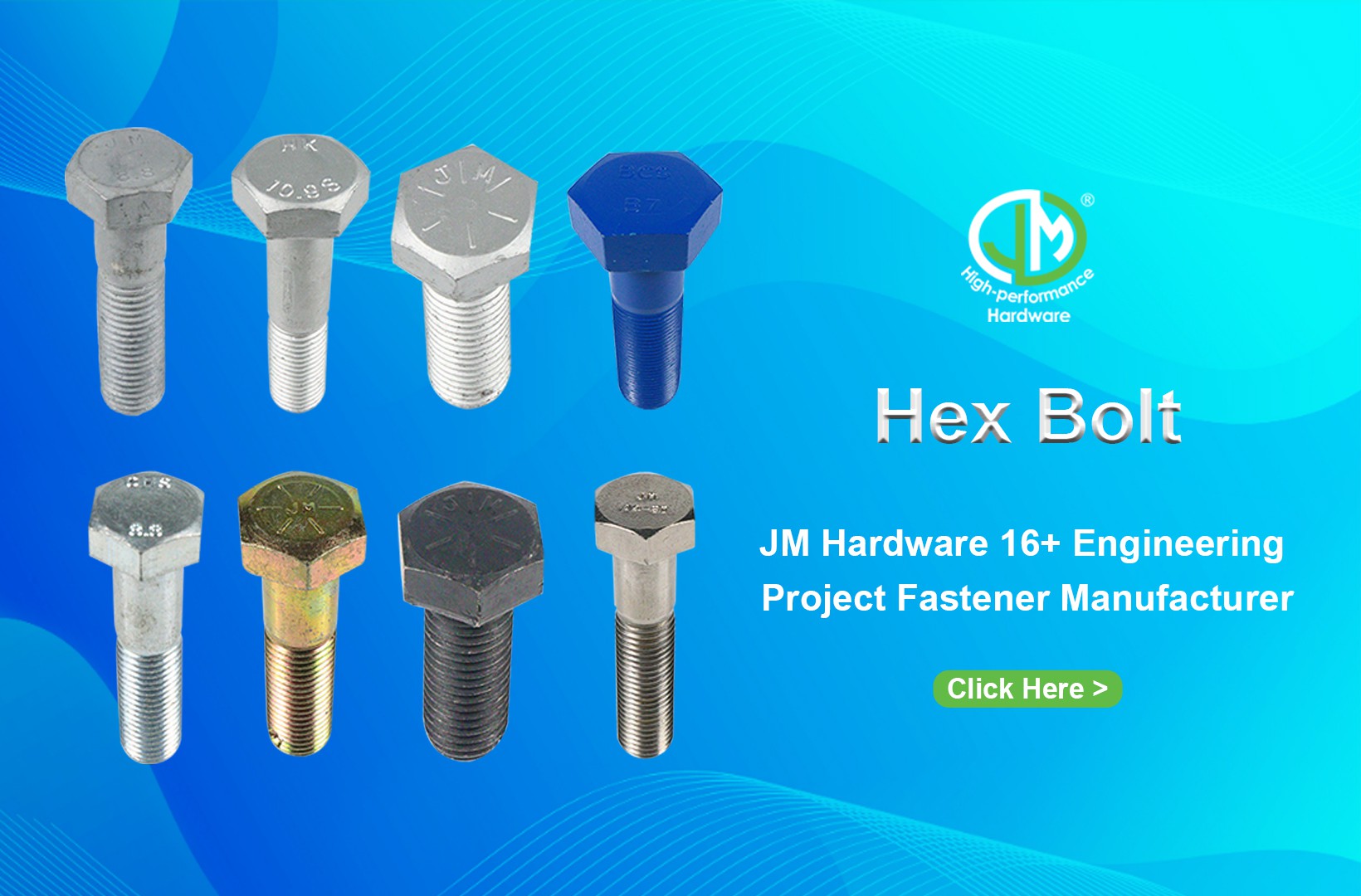
Hex bolt product range
Choosing the Right Fastener Starts with Its Function
Different fastener types perform different roles within an assembly. Bolts and nuts create clamped connections, screws provide threaded fastening, washers distribute bearing pressure, and pins help locate, retain, or connect components.
For industrial purchasing, product selection should consider the connection design, mating components, applied loads, installation conditions, required standards, and operating environment rather than relying on product appearance alone.
Standard Bolts
Threaded fasteners generally used with nuts or tapped holes to create mechanical clamping connections. Common options include hex bolts, heavy hex bolts, carriage bolts, and structural bolts.
Standard Nuts
Internally threaded fasteners used with compatible external threads. Hex nuts, lock nuts, coupling nuts, and wing nuts serve different connection and assembly requirements.
Standard Washers
Components placed between fastening surfaces to distribute bearing pressure, protect contact surfaces, or provide a specified spacing or locking function.
Standard Pins
Mechanical components used for positioning, alignment, retention, or connection. Cotter pins, clevis pins, hitch pins, and R-clips are common examples.
Standard Screws
Threaded fasteners available in different head, drive, and thread configurations. Machine screws, tapping screws, and socket head cap screws serve different assembly requirements.
Fastener Materials and Surface Finishes for Different Operating Conditions
Material selection and surface treatment influence fastener strength, corrosion behavior, compatibility, and service performance. The appropriate combination depends on the application environment and the specified mechanical requirements.
Carbon Steel
Commonly used for industrial bolts, nuts, screws, and other general-purpose fasteners. The required grade and heat treatment should be selected according to the specified mechanical properties and service loads.
Alloy Steel
Used where defined strength and mechanical performance are required. Grade, heat treatment, hardness, and applicable product specifications must be considered together.
Stainless Steel
Selected for applications where corrosion resistance is important. Stainless steel grade, exposure conditions, temperature, and the risk of galling should be evaluated before selection.
Brass and Other Materials
Brass and other available material options can be considered when electrical, environmental, weight, or application-specific requirements influence the fastening design.
Common Industrial Fastener Surface Treatments
| Surface Finish | General Characteristics | Selection Considerations |
|---|---|---|
| Plain | No additional metallic coating. | Consider the base material and environmental exposure. |
| Zinc Plating | Provides a protective zinc coating. | Specify coating type, thickness, and corrosion requirements. |
| Black Oxide | Produces a dark conversion coating. | Consider the required supplementary corrosion protection. |
| Hot-Dip Galvanizing | Provides a relatively thick zinc coating. | Check dimensional allowance, thread fit, and coating specifications. |
| Nickel or Chrome Plating | Provides a metallic surface finish. | Confirm coating requirements and compatibility with the application. |
At JM Hardware, our listed fastener material options include carbon steel, alloy steel, stainless steel, and brass. Available finishes listed on our product pages include plain, zinc plating, black oxide, nickel, chrome, and hot-dip galvanizing. Specific combinations depend on the product and confirmed order specifications.
Standard Fastener Specifications and Quality Verification
For industrial fastener procurement, a product name alone is not enough to define a suitable component. Dimensional standards, material grades, thread specifications, mechanical properties, and surface treatments should be checked together before production approval.
Product Standards
Standards such as ASME B18 series specifications define dimensional and other product requirements for particular fastener types. Always confirm the exact standard and revision applicable to the ordered product.
Mechanical Requirements
Material specifications and property classes determine the required mechanical performance. For example, ASTM A307 covers specified carbon steel bolts, studs, and threaded rods rather than all types of fasteners.
Thread and Assembly Details
Metric and inch threads are not interchangeable simply because their nominal diameters appear similar. Thread pitch, thread series, tolerance, and mating components must be compatible.
Quality Checks for Industrial Fastener Orders
A practical quality verification plan should cover the product from material identification through dimensional inspection and final delivery. The following checks are useful when evaluating a standard fastener batch:
Incoming Material Inspection
Check material identification and relevant material documentation against the specified order requirements.
Dimensional Inspection
Verify critical dimensions, thread characteristics, head dimensions, and overall length.
Mechanical Testing
Check hardness and tensile properties when required by the applicable specification.
Coating Inspection
Confirm the specified surface finish and coating thickness where applicable.
Visual and Defect Inspection
Check surface condition, visible defects, thread quality, and other specified acceptance criteria.
Final Batch Verification
Review inspection records, product identification, packaging, and order consistency before shipment.
Our listed product inspection equipment includes calipers, go/no-go gauges, tensile testing machines, hardness testers, salt spray testers, hot-dip galvanizing thickness testers, 3D detectors, projectors, and magnetic flaw detectors. The actual inspection method and acceptance criteria should correspond to the product specification and purchase order.
Industrial Fastener Applications and Bulk Procurement Considerations
Standard fasteners are used across structural steel, mechanical equipment, automotive systems, energy projects, and infrastructure. Each application requires an appropriate combination of fastening function, mechanical properties, materials, and connection compatibility.
Structural Steel and Metal Buildings
Structural bolts, compatible nuts, and washers are selected according to connection design, required mechanical properties, and applicable structural fastening specifications.
Mechanical Equipment
Hex bolts, cap screws, nuts, and washers support equipment assembly, component retention, and mechanical connections.
Energy and Tower Projects
Tower bolts, step bolts, structural fasteners, and other project-specific components are used in tower and energy infrastructure.
Automotive and Agricultural Equipment
Pins, retaining components, bolts, and nuts help secure moving or removable assemblies and support equipment maintenance.
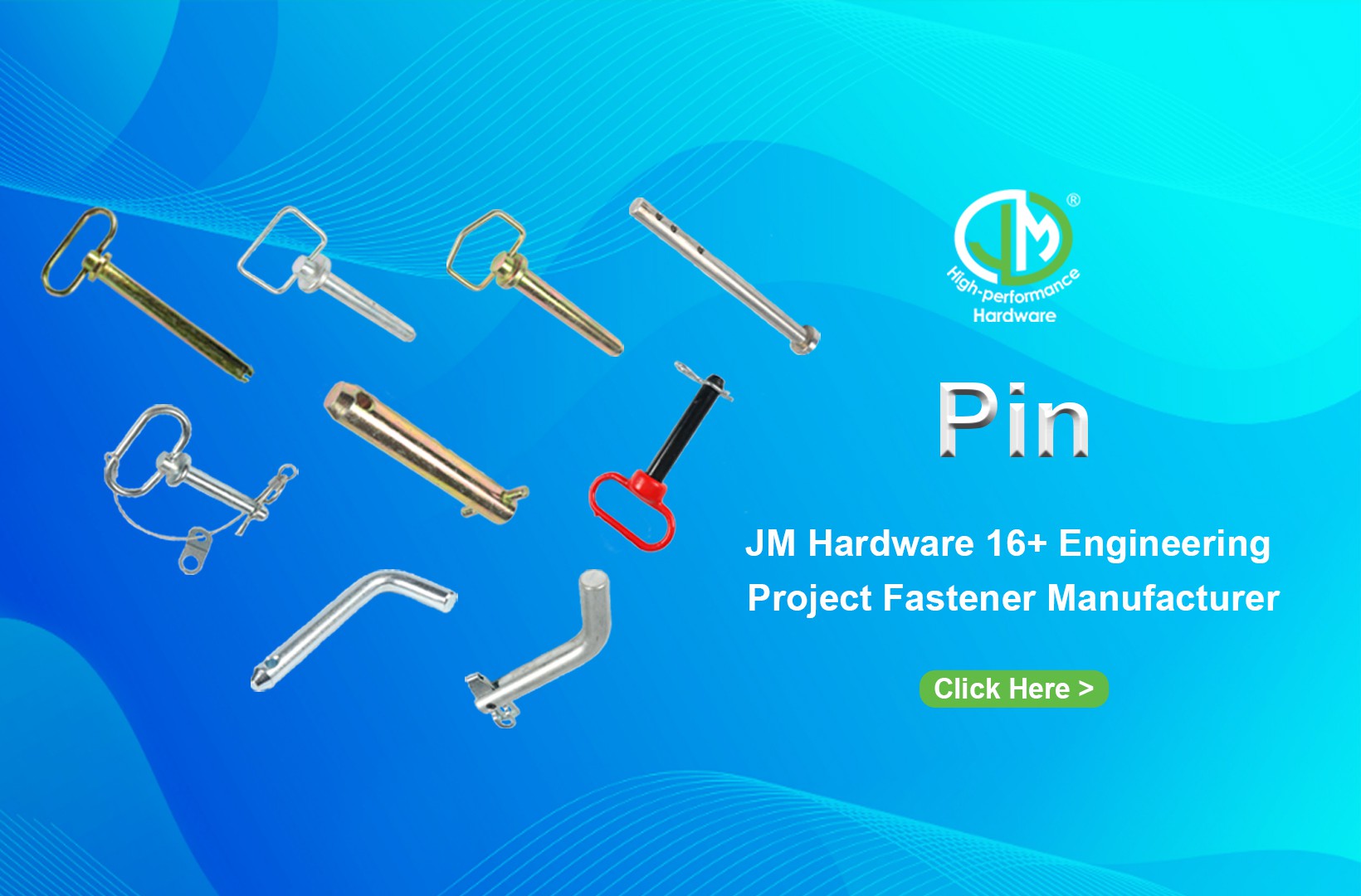
Industrial pin and retaining fastener range
Why Connection Compatibility Matters
In a multi-component assembly, a bolt, nut, and washer must work together as a fastening system. An incorrect thread series, incompatible strength grade, unsuitable washer dimensions, or inappropriate coating can affect installation and connection performance.
For applications involving repeated removal or movement, pins and retaining components should also be selected according to their retention method, installation access, and expected operating conditions.
What to Verify Before Placing a Bulk Fastener Order
At JM Hardware, we supply standard fasteners for different industrial requirements and also provide customized fastener solutions. When a project requires a non-standard dimension, special material, or a specific connection configuration, the applicable drawings and technical requirements can be reviewed for manufacturing feasibility.
Explore JM Hardware Manufacturing Capabilities
Learn more about our fastener manufacturing processes and engineering services when evaluating a supplier for industrial fastening projects.
Standard Fastener FAQs for Industrial Buyers
Practical answers to common questions about fastener selection, specifications, compatibility, quality inspection, and bulk procurement.
1. How should you select standard bolts and nuts for an industrial assembly?
Start by identifying the connection design, applied loads, installation space, and required product standard. Then match the bolt and nut by nominal diameter, thread pitch, thread series, material, and mechanical grade. For structural or heavy-duty applications, the washer type and bearing surface requirements should also be checked. Selecting components individually without verifying their compatibility can result in assembly problems or inadequate connection performance.
2. When should you choose carbon steel instead of stainless steel fasteners?
Carbon steel fasteners are commonly selected for general industrial and structural connections where the required strength and protective coating can be specified appropriately. Stainless steel fasteners are considered when corrosion resistance is an important requirement. However, stainless steel is not automatically suitable for every environment or load condition. Buyers should evaluate the specific stainless steel grade, temperature, exposure to chemicals or chlorides, mechanical requirements, and the possibility of galling during installation.
3. How do you avoid ordering the wrong metric or inch-thread fasteners?
Specify the thread system instead of providing only a nominal diameter. Metric threads should include the diameter and pitch, while inch-based threads should identify the nominal size, threads per inch, and thread series such as UNC or UNF. Also confirm the thread tolerance and whether the fastener is internally or externally threaded. For repeat procurement, approved drawings or samples can help reduce specification misunderstandings between purchasing and manufacturing teams.
4. Which washer should you use when a bolted connection has a large bearing surface requirement?
A flat washer is commonly used to distribute bearing pressure over a larger contact area and protect the connected surface. In structural applications, hardened steel washers may be required when specified by the applicable connection standard. Spring lock washers and other locking components serve different purposes and should not automatically replace a specified structural washer. Confirm the washer's inside diameter, outside diameter, thickness, material, and applicable specification before ordering.
5. What surface finish should you specify for fasteners used in outdoor equipment?
Outdoor fasteners should be selected according to moisture exposure, atmospheric conditions, corrosion risks, and the expected service environment. Zinc plating and hot-dip galvanizing are among the finishes listed in our product range, but they have different coating characteristics and dimensional implications. Stainless steel may also be appropriate depending on the application. Buyers should specify the required coating system, thickness, relevant corrosion test requirements, and thread-fit considerations rather than simply requesting a corrosion-resistant finish.
6. What should you check when replacing an existing fastener with a different manufacturer’s product?
A replacement should match the original product's functional and technical requirements, not just its external appearance. Check dimensions, thread specifications, material, mechanical grade, coating, head configuration, and the relevant product standard. If the fastener belongs to a structural or safety-critical assembly, verify the engineering requirements and applicable acceptance criteria before approving an alternative. A sample inspection or drawing comparison can help confirm dimensional compatibility.
7. How can industrial buyers evaluate the quality of a bulk fastener shipment?
Establish inspection requirements before production and shipment. Depending on the product specification, verification can include dimensional measurements, thread gauges, hardness testing, tensile testing, material documentation, coating-thickness checks, and visual inspection. Buyers should also confirm batch identification, sampling procedures, acceptance criteria, and required inspection reports. These measures help identify deviations and maintain consistency across repeat orders.
8. Which retaining pin is suitable for agricultural machinery and removable connections?
The choice depends on how the components are connected and whether frequent removal is required. Clevis pins are used in connections that permit controlled movement, while hitch pins and lynch pins are commonly used for removable equipment connections. Hairpin cotter pins and R-clips can retain compatible pins by engaging with a hole or retaining feature. Confirm the pin diameter, usable length, retaining arrangement, material, and operating loads before selecting a replacement.
9. What information should distributors provide when purchasing multiple fastener types in one order?
Prepare a clear product schedule for each item, including product name, drawing or standard, dimensions, thread specifications, material, grade, finish, quantity, and packaging requirements. Separate specifications for bolts, nuts, washers, screws, and pins to prevent product mixing. Where components must work together, identify the matching assemblies. For repeat orders, retaining approved product specifications and reference samples can improve purchasing consistency and simplify order verification.
10. Can JM Hardware manufacture fasteners when a standard catalog specification does not meet the project requirements?
Yes. We provide customized fastener manufacturing in addition to our standard fastener range. Our customization services cover project-specific fastener requirements, with manufacturing processes including cold heading, hot forging, machining, and stamping. The feasibility of a particular design depends on its geometry, material, dimensions, manufacturing process, and inspection requirements. Technical drawings, reference samples, or product specifications can be reviewed to determine a suitable manufacturing approach.
 xarella.huang@jm-fastener.com
Since our establishment in 2006, JM has been adhering to the mission of creating maximum value for customers by providing differentiated services, and making a positive contribution to the society.