


隐藏-Metal building project
JM Hardware® Structural steel & Metal Building Fastener
We have provided OEM/ODM manufacturing service for 25 years. No matter what your requirements are, our extensive know-how and experience assure you a satisfactory result.
We put our most effort to offer good quality, satisfied service, competitive price, timely delivery to our valued customers.
What is Structural Steel Fabrication
Structural steel fabrication is the process of creating steel components that are used in the construction of buildings, bridges, industrial structures, and other infrastructure projects. It involves transforming raw steel into finished products that can be assembled to form the framework or skeleton of a structure.
What is Material of Structural Fasteners
Structural fasteners are essential components used in the assembly of structural elements in construction projects. The materials used in manufacturing these fasteners are selected based on their strength, durability, corrosion resistance, and suitability for the specific environment in which they will be used. Here are the primary materials used for structural fasteners:
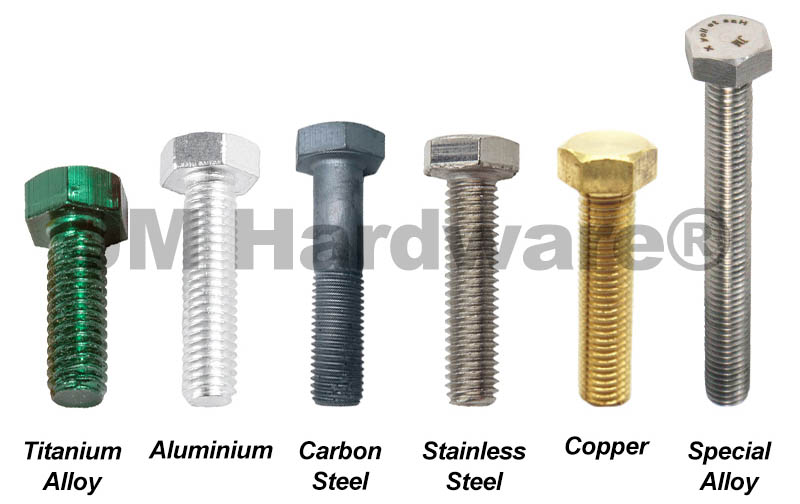
◆ Heat-Treated Alloy Steel: These fasteners undergo processes like quenching and tempering to improve their mechanical properties, making them suitable for high-stress applications.
◆ Hot-Dip Galvanizing: A process where fasteners are coated with a thick layer of zinc to protect against corrosion, especially in outdoor environments.
◆ Black Oxide: A conversion coating that provides mild corrosion resistance and a black finish to steel fasteners.
◆ Dacromet and Geomet Coatings: These are water-based coatings that offer high levels of corrosion resistance without the risk of hydrogen embrittlement.
◆ Medium Carbon Steel: Heat-treated medium carbon steel is used for high-strength fasteners, such as Grade 5 and Grade 8 bolts. This material offers a good balance of strength and toughness.
◆ High Carbon Steel: Offers higher hardness and strength, making it suitable for heavy-duty applications, but it is less ductile.
◆ Martensitic Stainless Steel (e.g., 410, 420): Offers higher strength and hardness compared to austenitic grades but with slightly less corrosion resistance.
◆ Ferritic Stainless Steel: Provides good corrosion resistance and is often used in less critical applications compared to austenitic stainless steel.
What are Structural Fasteners Strength Standard
Structural fasteners are crucial in ensuring the integrity and safety of buildings, bridges, and other structures. Their strength is measured according to specific standards that define the mechanical properties required for these fasteners to perform effectively under load. Here are the primary strength standards and grades for structural fasteners:
- ASTM A325:
- Commonly used for structural bolts in heavy steel construction, such as bridges and buildings.
- Tensile Strength: 120,000 psi (min).
- Yield Strength: 92,000 psi (min) for sizes up to 1 in. and 81,000 psi (min) for sizes over 1 in.
- ASTM A490:
- A higher-strength grade compared to A325, often used in critical connections.
- Tensile Strength: 150,000 psi (min).
- Yield Strength: 130,000 psi (min).
- ASTM A307:
- Covers carbon steel bolts and studs, ranging from low to medium tensile strength.
- Grade A: General-purpose bolts, tensile strength around 60,000 psi.
- Grade B: Heavy hex bolts for flanged joints in piping systems, tensile strength around 60,000 psi.
- ASTM A354 (Grades BC and BD):
- Specifies alloy steel bolts, with grade BD being equivalent to A490 in strength.
- Grade BC: Tensile strength of 120,000 - 150,000 psi.
- Grade BD: Tensile strength of 150,000 - 180,000 psi.
- ASTM F3125:
- This standard consolidates six standards (A325, A325M, A490, A490M, F1852, and F2280) into one, defining performance-based standards for high-strength structural bolts.
- Grade A325: Tensile Strength 105,000 - 120,000 psi (min).
- Grade A490: Tensile Strength 150,000 - 17
- SAE J429 (Grades 5 and 8):
- These grades are often used for industrial and automotive applications but can also be used in structural applications.
- Grade 5: Tensile strength of 120,000 psi.
- Grade 8: Tensile strength of 150,000 psi.
- ISO 898-1:
- Specifies the mechanical properties of fasteners made from carbon steel and alloy steel.
- Property Class 8.8: Similar to ASTM A325, with a minimum tensile strength of 800 MPa (116,000 psi) and a minimum yield strength of 640 MPa (92,800 psi).
- Property Class 10.9: Equivalent to ASTM A490, with a minimum tensile strength of 1,000 MPa (145,000 psi) and a minimum yield strength of 900 MPa (130,500 psi).
- Property Class 12.9: High-strength fasteners with a minimum tensile strength of 1,200 MPa (174,000 psi) and a minimum yield strength of 1,080 MPa (156,600 psi).
4. EN (European Standards)
- EN 14399:
- Specifies the requirements for high-strength structural bolting assemblies for preloading, typically used in steel structures.
- Property Class 8.8 and 10.9: As described in ISO standards.
- EN 15048:
- Covers non-preloaded structural bolting assemblies, commonly used for simpler structural applications.
5. BS (British Standards)
- BS 4395:
- British standard for high-strength friction grip bolts, commonly used in steel construction.
- Part 1: Relates to Grade 8.8 bolts.
- Part 2: Relates to Grade 10.9 bolts.
- BS EN 14399:
- Harmonized with European standards for high-strength structural bolting.
Key Terms to Understand:
- Tensile Strength: The maximum amount of tensile (pulling) stress that a fastener can withstand before breaking.
- Yield Strength: The amount of stress at which a fastener begins to deform permanently.
- Proof Load: The maximum force that a fastener can withstand without permanently deforming
BS (British Standards)
- BS 4395:
- British standard for high-strength friction grip bolts, commonly used in steel construction.
- Part 1: Relates to Grade 8.8 bolts.
- Part 2: Relates to Grade 10.9 bolts.
- BS EN 14399:
- Harmonized with European standards for high-strength structural bolting.
Key Terms to Understand:
- Tensile Strength: The maximum amount of tensile (pulling) stress that a fastener can withstand before breaking.
- Yield Strength: The amount of stress at which a fastener begins to deform permanently.
- Proof Load: The maximum force that a fastener can withstand without permanently deforming
Material: Carbon Steel, Alloy Steel, Stainless Steel
Grade: 10.9HRC,A325TC,A490TC,10.9S,S10T
Thread: M, UNC, UNF, BSW
Finish: Self Color, Plain, Zinc Plated ( Clear/Blue/Yellow/Black ), Black Oxide, Nickel, Chrome, HDG
Size: 1/2”-11/2”,M12-M36
Material: CarbonSteel,AlloySteel
Grade: ASTMA325,A490,CL10.9
Thread: M,UNC,UNF
Finish:Plain,ZincPlated(Clear/Blue/Yellow/Black),Blackoxide,Nickel,Chrome,H.D.G.
Material:Carbon Steel, Alloy Steel, Stainless Steel (SS304/ SS316)
Grade:A307 Gr. A; SAE J429 Gr.2, 5,8
A2-70, A2-80, A4-70, A4-80 (Stainless Steel)
Thread: M, UNC, UNF
Finish: Plain, Zinc Plated(Clear/Blue/Yellow/Black), Black oxide, Nickel, Dacrotized, Spray, Painting, H.D.G., Mechanical galvanized, Geomet, Magni, Teflon, Zinc-nickel alloy
Finish: H.D.G., zinc plated
Type: US type
Material: Carbon Steel, Alloy Steel, etc
Grade: ASTM A307B, A449, F1554
Thread: M, UNC, UNF
Finish: Plain, Zinc Plated(Clear/Blue/Yellow/Black), Black oxide, Nickel, Teflon, H.D.G.

Structural Fasteners Application Industry
Structural fasteners are critical components used to join or secure structural elements in various industries. Their primary function is to ensure the stability, strength, and integrity of structures by holding together key components such as beams, columns, and panels. Here are some of the key industries where structural fasteners are widely used:
◆ Defense Structures: In defense installations, structural fasteners are used to assemble and secure various structures, including bunkers, radar installations, and missile launch platforms.
◆ Pipelines: Fasteners are used in the construction of pipelines to secure joints, flanges, and other components that must withstand high pressure and varying temperatures.
◆ Heavy Machinery: In construction and agricultural machinery, structural fasteners are used to assemble and secure large, load-bearing components that must endure heavy use and tough conditions.
◆ Spacecraft: In spacecraft, structural fasteners are used to hold together components that must withstand the extreme conditions of space, including high loads during launch and exposure to temperature extremes.
◆ Spacecraft: In spacecraft, structural fasteners are used to hold together components that must withstand the extreme conditions of space, including high loads during launch and exposure to temperature extremes.
◆ Offshore Structures: In addition to oil platforms, structural fasteners are used in other offshore structures such as underwater pipelines, subsea installations, and floating wind farms.
◆ Transmission Towers: In the energy sector, fasteners are also used in the assembly of transmission towers that support high-voltage power lines. These towers require fasteners that can withstand environmental exposure and mechanical loads.
◆ Structural Supports: In underground mining, fasteners are used to assemble and secure structural supports, such as beams and frames, that maintain the stability of tunnels and shafts.
◆ Defense Structures: In defense installations, structural fasteners are used to assemble and secure various structures, including bunkers, radar installations, and missile launch platforms.
LEAVE A MESSAGE
Get In Touch With US
JM is capable of manufacturing many kinds of standard fasteners and custom hardware parts with different crafts.
 xarella.huang@jm-fastener.com
Since our establishment in 2006, JM has been adhering to the mission of creating maximum value for customers by providing differentiated services, and making a positive contribution to the society.